
Although teeth often steal the spotlight, gums are just as important. After all, without healthy gum tissue, your teeth don’t have a reliable foundation to stay in place or transfer nutrients! That’s why it’s crucial that you get in touch with us if you start to notice anything unusual, like bleeding when you floss. The sooner you do, the sooner we can determine if there is an active infection in your gums and, if there is, get to work eliminating it.

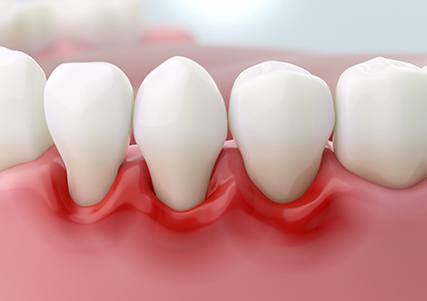
Gum disease is something roughly 50% of Americans struggle with. In the early stages, the symptoms are relatively mild, like slight sensitivity. If the infection is left alone to progress, however, then there are serious consequences. In fact, gum disease is the leading cause of tooth loss in adults! Plus, once gum tissue is lost, it won’t grow back. That’s why it’s so important not to take the “wait and see” approach. If you suspect that you may have gum disease, then you should contact our dental office to schedule an exam with Dr. Renkuntla.

There are several symptoms we recommend keeping an eye out for between visits, including:
If one or more of these arise, then schedule an appointment with us so we can determine if you’d benefit from gum disease treatment in Saginaw.

At our office, we offer both scaling and root planing as well as antibiotic therapy. During your visit, we will discuss each option in-depth, share our recommendations, and answer any questions you have. In the meantime, you can read on to learn a little more.

Advanced cases of gum disease may require scaling and root planing, a specialized treatment designed to stop the symptoms of periodontitis from getting worse. We start by removing infected tissue and plaque from above and beneath the gum line via scaling. This is followed by root planing, which is the process of smoothing out the tooth roots so they can more effectively reattach to existing teeth. Both work to reduce inflammation and recession in gum tissue, and, thanks to our dental office’s soft tissue laser technology, your treatment is sure to be more comfortable than a traditional deep cleaning. Here’s a quick guide to how the scaling and root planing process works at Saginaw Dental, but please feel free to contact our staff if you’d like to learn more.

Gum disease in its early stages (called gingivitis) can usually be reversed with improved oral hygiene habits. However, an infection that has advanced to the stage called periodontitis will require professional treatment, and it may show itself through symptoms like:
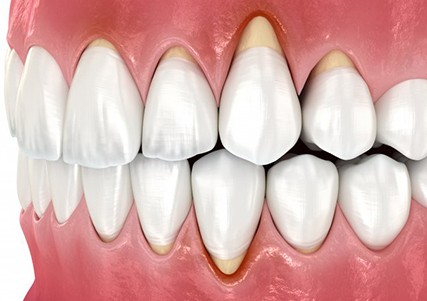
The scaling and root planing process typically takes place during two appointments and usually works something like this:

Scaling and root planing can be an intensive treatment, so it may take several weeks for your teeth and gums to recover. While you can expect your teeth and gums to be tender and sensitive during the healing process, you can help yourself stay comfortable by:

Since scaling and root planing takes multiple appointments to complete, typically every three to four months, our dental office wants to help accelerate the healing process necessary to complete treatment. This is done through antibiotic therapy, which promotes the healing of gum tissue between routine visits. After providing LDA, or locally delivered antimicrobials, we’ll ask you to come back after a few months so we can continue the healing process. It only takes a few minutes to perform and is proven to stop existing gum disease in its tracks.