
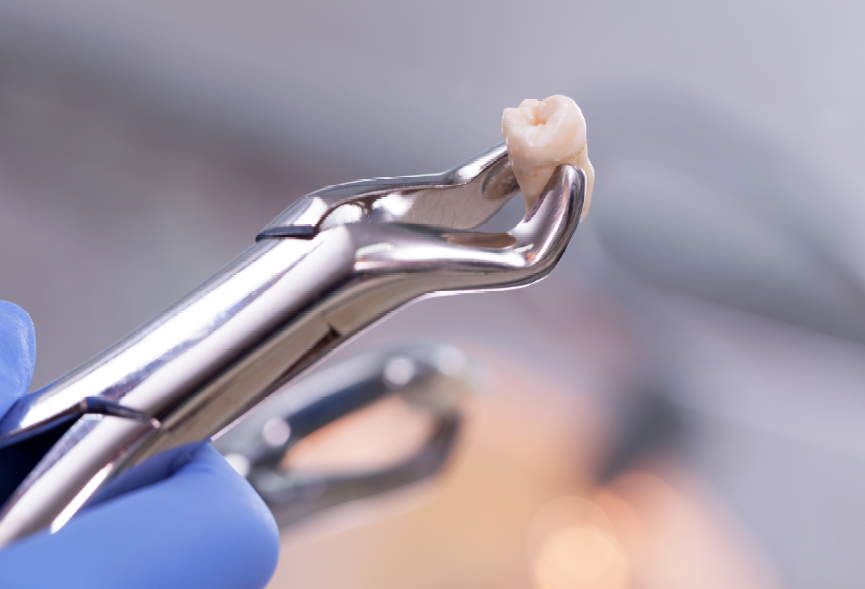
Hearing that you need a tooth extraction can be unsettling. After all, most people would prefer to keep their natural teeth whenever possible. Fortunately, dentists don’t typically recommend removing a tooth without a good reason. In many cases, extraction becomes necessary when a tooth is too damaged or compromised to be predictably restored.
Understanding why extraction may be recommended can make the process feel a little less intimidating.
Severe Tooth Decay
One of the most common reasons for tooth extraction is extensive tooth decay. A cavity that is caught early can often be treated with a filling. However, decay that progresses deep into the tooth can cause extensive structural damage.
If there isn’t enough healthy tooth structure remaining to support a restoration, removing the tooth may ultimately be the safest option. Your dentist will consider whether the tooth can be predictably repaired before recommending extraction.
Advanced Gum Disease
Your gums and jawbone play an important role in keeping your teeth securely in place. Advanced periodontal disease can damage these supporting structures and cause teeth to become loose.
In some cases, periodontal treatment can stabilize affected teeth. When a tooth has become severely compromised, however, extraction may be necessary to address the problem and protect your overall oral health.
A Severely Broken or Damaged Tooth
Accidents, sports injuries, falls, and other trauma can cause significant damage to a tooth. While many chipped or fractured teeth can be repaired, some injuries leave a tooth too damaged to restore.
Depending on the location and severity of the fracture, your dentist may recommend a restoration, root canal treatment, or extraction. If a dental injury has caused severe damage or pain, prompt evaluation is especially important.
Impacted Wisdom Teeth
Wisdom teeth are notorious for causing problems because they may not have enough room to erupt properly. An impacted tooth can remain trapped beneath the gum or jawbone and, in some cases, contribute to infection, decay, gum disease, or damage to neighboring teeth.
Not every impacted wisdom tooth automatically needs to be removed. Your dentist will evaluate its position and condition before determining whether extraction is appropriate.
Dental Infections
A severely infected tooth can cause significant pain, swelling, and other symptoms. Depending on the circumstances, treatment such as a root canal may be able to save the tooth. If the tooth cannot be adequately treated or restored, however, extraction may be necessary to remove the source of the infection.
An especially painful or damaged tooth may require an emergency tooth extraction. If you’re searching for “emergency tooth extraction near me,” don’t ignore severe dental pain or swelling while you search. Prompt professional evaluation can help determine whether extraction or another treatment is needed.
Overcrowding or Orthodontic Treatment
Sometimes a tooth may need to be removed to create enough space for other teeth. In certain orthodontic treatment plans, extracting selected teeth can help improve alignment when there isn’t sufficient room in the dental arch.
Ultimately, the goal isn’t simply to remove a tooth. Your dentist is looking at the bigger picture and determining which treatment will best support your oral health.
When extraction is recommended, asking questions about why it’s necessary and what replacement options may be available can help you feel confident about your next step.
About the Practice
Saginaw Dental is led by Dr. Rupeshwar Renkuntla, DDS, a dedicated dentist with nearly two decades of experience in the dental field. After earning his Bachelor of Dental Surgery in India, Dr. Renkuntla continued his education in the United States, earning his Doctor of Dental Surgery degree in Oklahoma. His interest in dentistry stems from a long-standing passion for health sciences and the connection between oral health and overall well-being. He is a member of the American Dental Association and Texas Dental Association and provides comprehensive care, including tooth extractions, restorative dentistry, emergency dentistry, and preventive services.
Call us at (817) 989-2832 or schedule your appointment online